
"Cocoa River"
400 article(s) found

Moderate full-bodied Hazenda Coffee Estate Fine Coffee Bean Planting Location Climate Elevation Simple
There is a dock to the south, more than 900 meters long. In the harbor, ships from different parts of the world are moored, flying various flags. The port railway leads to Quito, the capital, and a series of highways connect Quito with other cities in the country. Bananas, cocoa, coffee, cotton and other products from all over the country are collected and distributed here. In the history of friendly exchanges between the peoples of China and Ecuador,

Introduction of Solar Coffee in Tarazhu Cooperative, the largest Coffee Cooperative in Costa Rica
For the exchange of professional baristas, please follow the coffee workshop (Wechat official account cafe_style) Costa Rica Coffee-Tarazu Cooperative-Solar treatment Costa Rica Tarrazu CoopeTarrazu RL Natural Costa Rica's largest coffee cooperative with stable quality and flavor (CoopeTarrazu RL) was established in 1970, since the beginning of the 228th

Introduction to the flavor and taste characteristics of Ecuadorian coffee manor with a long lingering aftertaste
Central mountain: after entering Ecuador from Colombia, the Andes is divided into the eastern and western Cordillera mountains, with a plateau high in the north and low in the south, averaging between 2500 and 3000 meters above sea level. The Andes run through the middle of the border. The ridges crisscross, dividing the plateau into more than ten intermountain basins. The most important are the Quito basin and the Cuenca basin in the south. Volcanic crowds in the territory
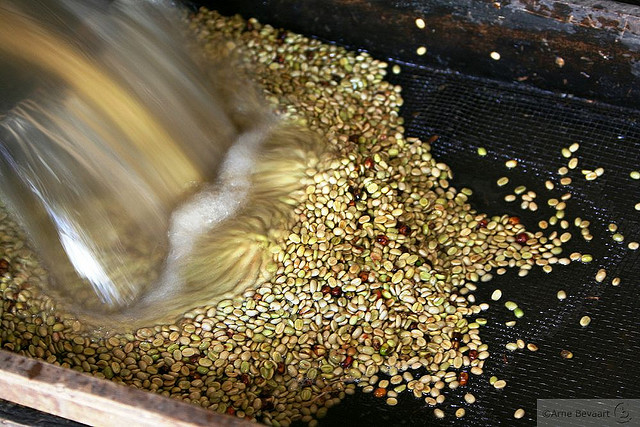
How to buy coffee beans Costa Rica Coffee Introduction Tara Pearl Diamond Hill Manor washed SHB Kadu
Costa Rica, Spanish La Republic de Costa Rica, English the Republic of Costa Rica, full name Costa Rica The capital city of San Jose. Official language Spanish. It is divided into 7 provinces, 81 counties and 421 districts. Columbus made his first voyage in 1502.

Introduction to the flavor characteristics of the manor producing area of Ecuador's boutique coffee beans
Port Guayaquil is the largest seaport in Ecuador. It faces the Pacific Ocean and backs against Mount Santa Ana. The nearby island of Pune serves as a natural barrier to protect the harbour from storms. There is a wharf in the south, which is more than 900 meters long. Ships from different parts of the world flying various flags are moored in the harbor. The port railway leads to the capital Quito, and highways connect Quito with other cities in the country.

Introduction to the balanced and refreshing coffee flavor and taste manor of Hassanda Coffee Garden in Ecuador
Port Guayaquil is the largest seaport in Ecuador. It faces the Pacific Ocean and backs against Mount Santa Ana. The nearby island of Pune serves as a natural barrier to protect the harbour from storms. There is a wharf in the south, which is more than 900 meters long. Ships from different parts of the world flying various flags are moored in the harbor. The port railway leads to the capital Quito, and highways connect Quito with other cities in the country.

Introduction to Santa Cruz Manor in Ecuador Coffee Flavor and Taste area, which can be made into High-quality mixed Coffee
West coast: including coastal plains and foothills, high in the east and low in the west, generally below 200 meters above sea level, with some hills and low mountains at an altitude of 600 to 700 meters. Belongs to the tropical rain forest climate, the southernmost end begins to transition to the savanna climate. The average annual precipitation decreases from more than 3000 mm to about 500mm from north to south: part of the Amazon basin. Altitude 1200mm 250
Knowledge about coffee botany
According to the botanical description of coffee: coffee is Rubiaceae, coffee genus, perennial evergreen shrubs or small trees. There are more than 60 types of coffee classified, but there are roughly two varieties of coffee grown commercially on a large scale, one is Arabica, accounting for about 70 percent of the world's coffee planting area, and the other is Robasta, accounting for about 30 percent of the world's coffee planting area. According to our country
Knowledge of coffee botany.
9bf95f67gw1dzk8j7xbi4j.jpg (135.26 KB, downloads: 0) download attachment to photo album 2012-12-7 09:12 upload according to botanical description of coffee is: coffee is Rubiaceae, coffee, perennial evergreen shrubs or small trees. There are more than 60 types of coffee, but there are roughly two varieties of coffee grown on a large scale.

Roasting degree of Tarazhu coffee beans in Costa Rica
Costa Rica is located in the Central American isthmus, 10 north latitude, 84 west longitude. It faces the Caribbean Sea to the east and the North Pacific Ocean to the west. Costa Rica is located in the volcanic belt of the low latitudes of Central America, the central plateau and mountains are about 800 to 2000 meters above sea level, suitable for coffee growth. Costa Rican coffee has always been famous for its well-balanced, clean, clear and berry-flavored fruit acid. Excellent Costa Rica

Coffee botany knowledge-Malaysia Coffee City White Coffee
According to the botanical description of coffee: coffee is Rubiaceae, coffee genus, perennial evergreen shrubs or small trees. There are more than 60 types of coffee classified, but there are roughly two varieties of coffee grown commercially on a large scale, one is Arabica, accounting for about 70 percent of the world's coffee planting area, and the other is Robasta, accounting for about 30 percent of the world's coffee planting area. According to our country

Introduction to the characteristics of Nicaraguan coffee varieties, taste and flavor of high-quality coffee beans
Columbus arrived here in 1502 and reached the east coast of Nicaragua. In 1522, Spanish colonists began to conquer the region. The cities of Granada and Leon were founded in 1524. From then on, Nicaragua became a Spanish colony and came under the jurisdiction of the Governor's Office of Guatemala. The city of Leon developed into a political and cultural center; Granada became a commercial and agricultural center. In the later period of colonial rule

Basic knowledge of coffee botany
According to the botanical description of coffee: coffee is Rubiaceae, coffee genus, perennial evergreen shrubs or small trees. There are more than 60 types of coffee classified, but there are roughly two varieties of coffee grown commercially on a large scale, one is Arabica, accounting for about 70 percent of the world's coffee planting area, and the other is Robasta, accounting for about 30 percent of the world's coffee planting area. According to our country

A brief introduction to the taste of high-quality coffee beans in the flavor description of the moderately mellow Hassanda coffee garden in Ecuador
As early as the 18th century, Chinese clothing, textiles and other goods were shipped to Ecuadorian cities through Guayaquil. In August 1978, the Chinese cargo ship Jialing Jiang arrived here for the first time. Most of the import and export goods of the two countries are transported through Guayaquil, mainly oil, mainly distributed in the Guayaquil Bay, and oil fields are also found in the Amazon plain. Gold and silver are distributed in

Boutique Coffee knowledge about Coffee Botany
According to the botanical description of coffee: coffee is Rubiaceae, coffee genus, perennial evergreen shrubs or small trees. There are more than 60 types of coffee classified, but there are roughly two varieties of coffee grown commercially on a large scale, one is Arabica, accounting for about 70 percent of the world's coffee planting area, and the other is Robasta, accounting for about 30 percent of the world's coffee planting area. According to our country

Introduction to the flavor and taste of Nicaraguan boutique coffee beans the characteristics of the manor area
Columbus arrived here in 1502 and reached the east coast of Nicaragua. In 1522, Spanish colonists began to conquer the region. The cities of Granada and Leon were founded in 1524. From then on, Nicaragua became a Spanish colony and came under the jurisdiction of the Governor's Office of Guatemala. The city of Leon developed into a political and cultural center; Granada became a commercial and agricultural center. In the later period of colonial rule

Introduction to the Flavor characteristics and roasting degree of Lumumar AAA Coffee beans in Tanzania
Tanzania is a typical East African country, bordering Kenya and Uganda to the north, Malawi, Mozambique and Zambia to the south, and Rwanda and Burundi to the west. Many people like to compare Tanzanian coffee with his neighbor Kenya. Compared with Kenyan high-quality coffee beans, Tanzanian coffee has less bright acidity, softer and gentler beauty, more sweetness and red wine flavor.
Knowledge of coffee botany basic knowledge of fine coffee
According to the botanical description of coffee: coffee is Rubiaceae, coffee genus, perennial evergreen shrubs or small trees. There are more than 60 types of coffee classified, but there are roughly two varieties of coffee grown commercially on a large scale, one is Arabica, accounting for about 70 percent of the world's coffee planting area, and the other is Robasta, accounting for about 30 percent of the world's coffee planting area. According to our country

Coffee botany is mainly divided into the following five varieties
There are more than 60 types of coffee classified, but there are roughly two varieties of coffee grown commercially on a large scale, one is Arabica, accounting for about 70 percent of the world's coffee planting area, and the other is Robasta, accounting for about 30 percent of the world's coffee planting area. According to our national standards, the classification of coffee is mainly divided into the following five varieties. 1. Small seed coffee, that is, Arabian species. Original production

Introduction to the unique flavor and taste of Hassanda Coffee Manor in Ecuador
West coast: including coastal plains and foothills, high in the east and low in the west, generally below 200 meters above sea level, with some hills and low mountains at an altitude of 600 to 700 meters. Belongs to the tropical rain forest climate, the southernmost end begins to transition to the savanna climate. The average annual precipitation decreases from more than 3000 mm to about 500mm from north to south. Central Mountains: the Andes enter Ecuador from Colombia